Compressed Air & Lube Oil Systems
Two "Support" Systems That Aren't Optional
Compressed air and lube oil rarely get top billing in a plant tour — they don't generate power directly — but both are genuinely essential support systems. Lose instrument air, and dozens of control valves across the plant can fail to a default (usually safe, but often shutdown) position. Lose lube oil pressure to a turbine bearing, and you can cause severe mechanical damage within seconds. These systems earn their own module because the consequences of losing them are immediate and serious, even though day-to-day they tend to run quietly in the background.
Instrument Air vs. Service Air
A plant's compressed air system typically splits into two distinct uses after common compression, drying, and storage:
- Instrument air — clean, dry, oil-free compressed air supplying pneumatic control valve actuators and instruments throughout the plant. Because control valves depend on this air to position correctly, instrument air quality (dryness in particular) is tightly controlled — moisture in instrument air can freeze in cold weather or cause valve positioning problems.
- Service air — general-purpose compressed air for pneumatic tools, cleaning, and other maintenance uses, with less stringent quality requirements than instrument air.
Instrument air and service air systems are kept separate specifically because service air's lower quality standard could contaminate instrument air with moisture or oil, causing control valve malfunctions throughout the plant. Any temporary cross-connection needs to go through proper procedure, not an informal workaround.
The Compressed Air Chain
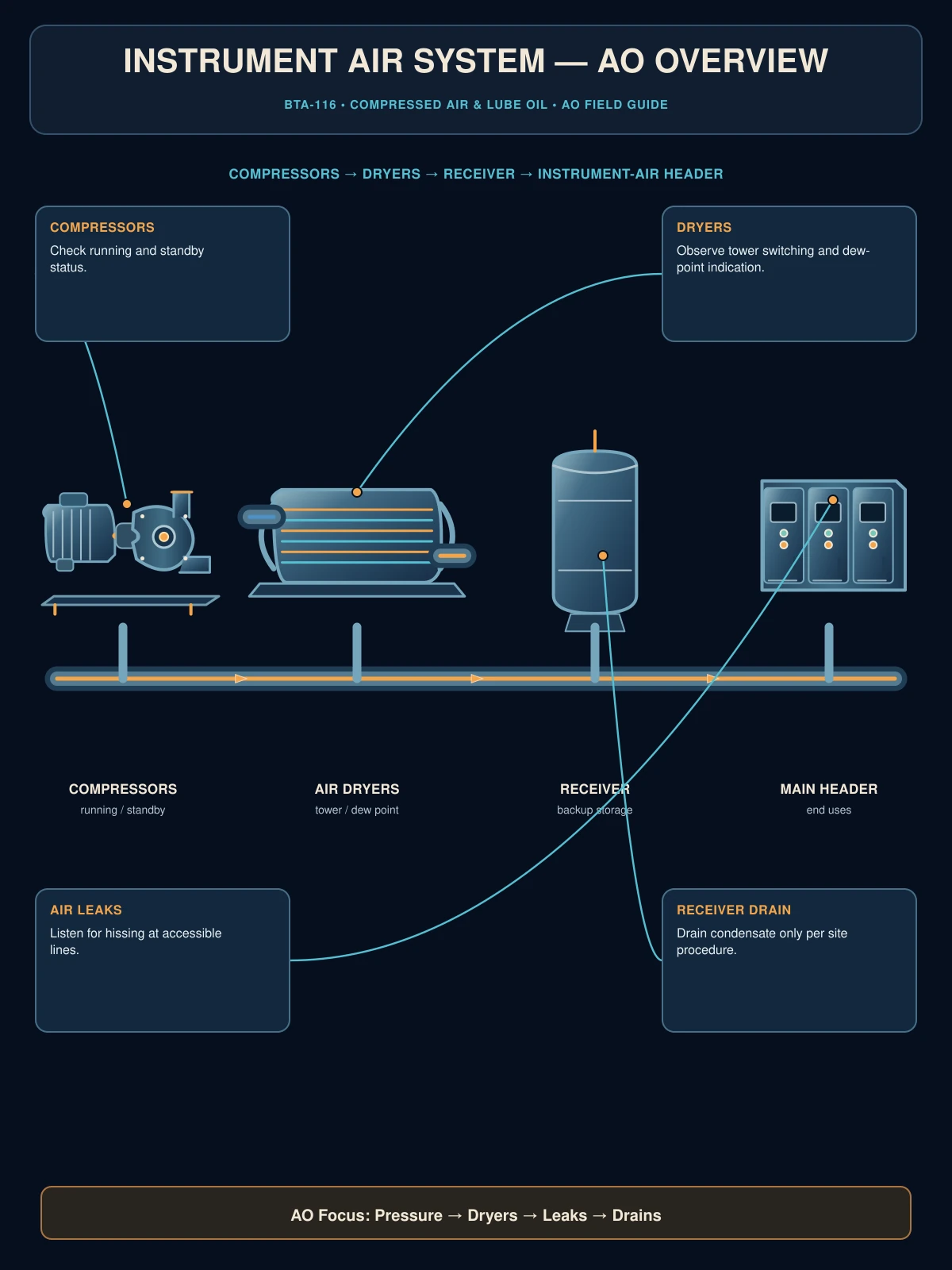
- Air compressors — typically running in a lead/lag or duty/standby arrangement so a single compressor failure doesn't take down the whole system.
- Air dryers — remove moisture from compressed air (commonly using a desiccant or refrigerated drying process) before it reaches instrument air users, since even small amounts of moisture can cause problems downstream.
- Air receiver — a storage tank that buffers demand spikes and provides a reserve of air, giving the system time to respond if a compressor trips before pressure drops enough to affect users.
Lube Oil: Protecting Rotating Equipment
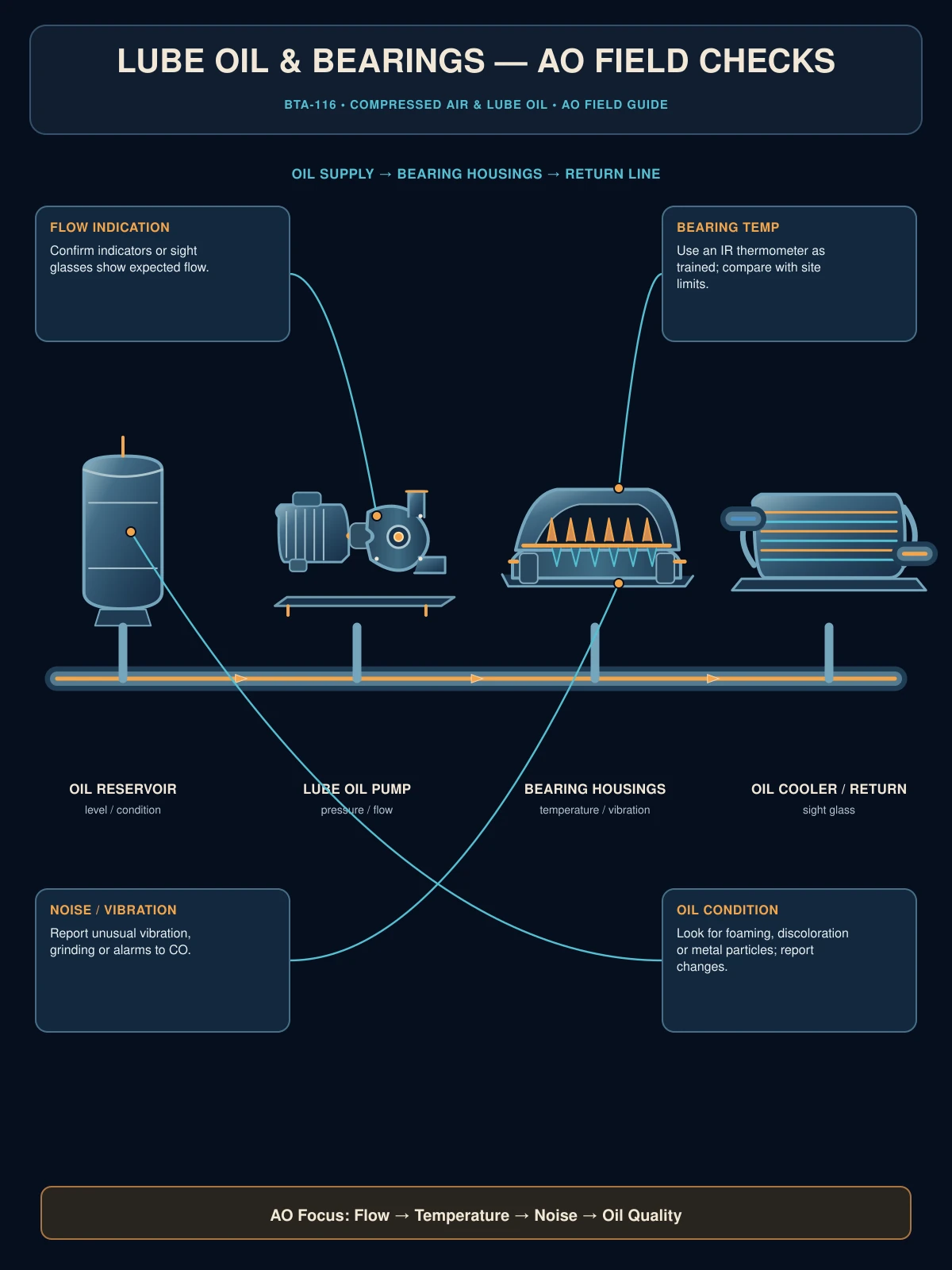
You've already encountered lube oil systems in the plant-type modules — this module consolidates that knowledge across turbine types and adds detail on system architecture. A lube oil system's core job is delivering clean, cool, pressurized oil continuously to bearings on rotating equipment (turbines, generators, large pumps and fans), preventing metal-to-metal contact that would otherwise destroy the bearing within seconds of operation.
Redundant Pumping: Main, Auxiliary, Emergency
Because a loss of lube oil pressure is so fast-acting and severe, lube oil systems typically have three layers of pumping redundancy:
- Main pump — often shaft-driven directly by the turbine itself once at speed, requiring no separate power source during normal operation.
- Auxiliary pump — AC motor-driven, running during startup/shutdown before the shaft is at speed, and as backup if the main pump's supply is insufficient.
- Emergency pump — DC motor-driven (battery-backed), ensuring oil flow continues even through a complete loss of AC power, protecting bearings through a normal or emergency shutdown.
This three-layer redundancy is a direct reflection of how seriously lube oil pressure loss is treated. If you ever see all three pump layers unavailable simultaneously, that's an extremely high-priority situation, not a routine deficiency.
Coolers and Filters: Keeping Oil Clean and Cool
Oil coolers remove heat picked up from bearing friction, typically using cooling water or air, keeping oil within its proper viscosity range — oil that's too hot thins out and loses its protective film strength. Oil filters continuously remove particulate contamination that would otherwise cause abrasive wear inside bearings; most systems run duplex filters (two filter housings) so one can be switched to service and cleaned while the other stays in continuous service, without ever interrupting oil flow to the bearings.
Ready to test what you just learned?