Abnormal Conditions & Troubleshooting
What "Abnormal" Actually Means
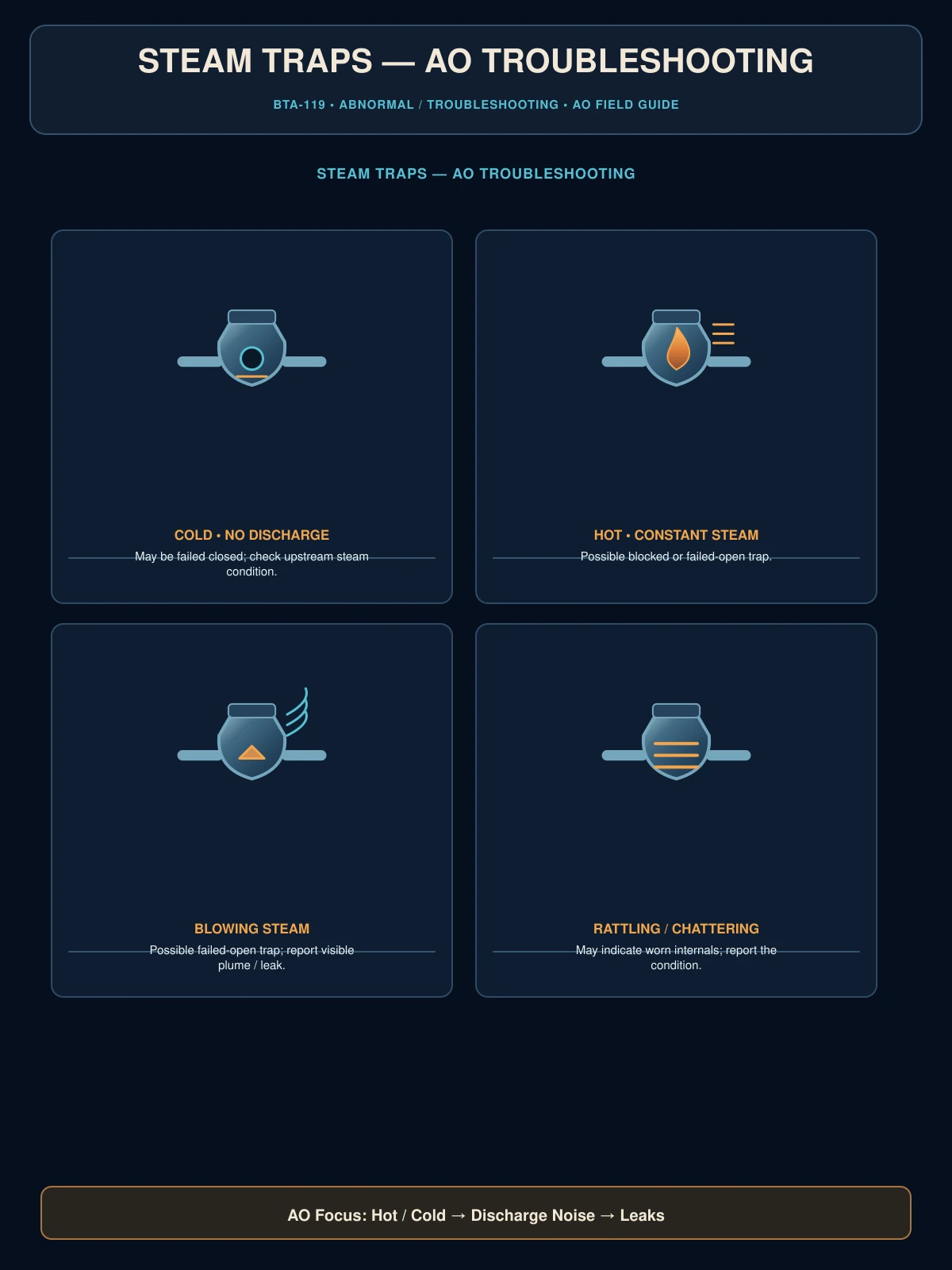
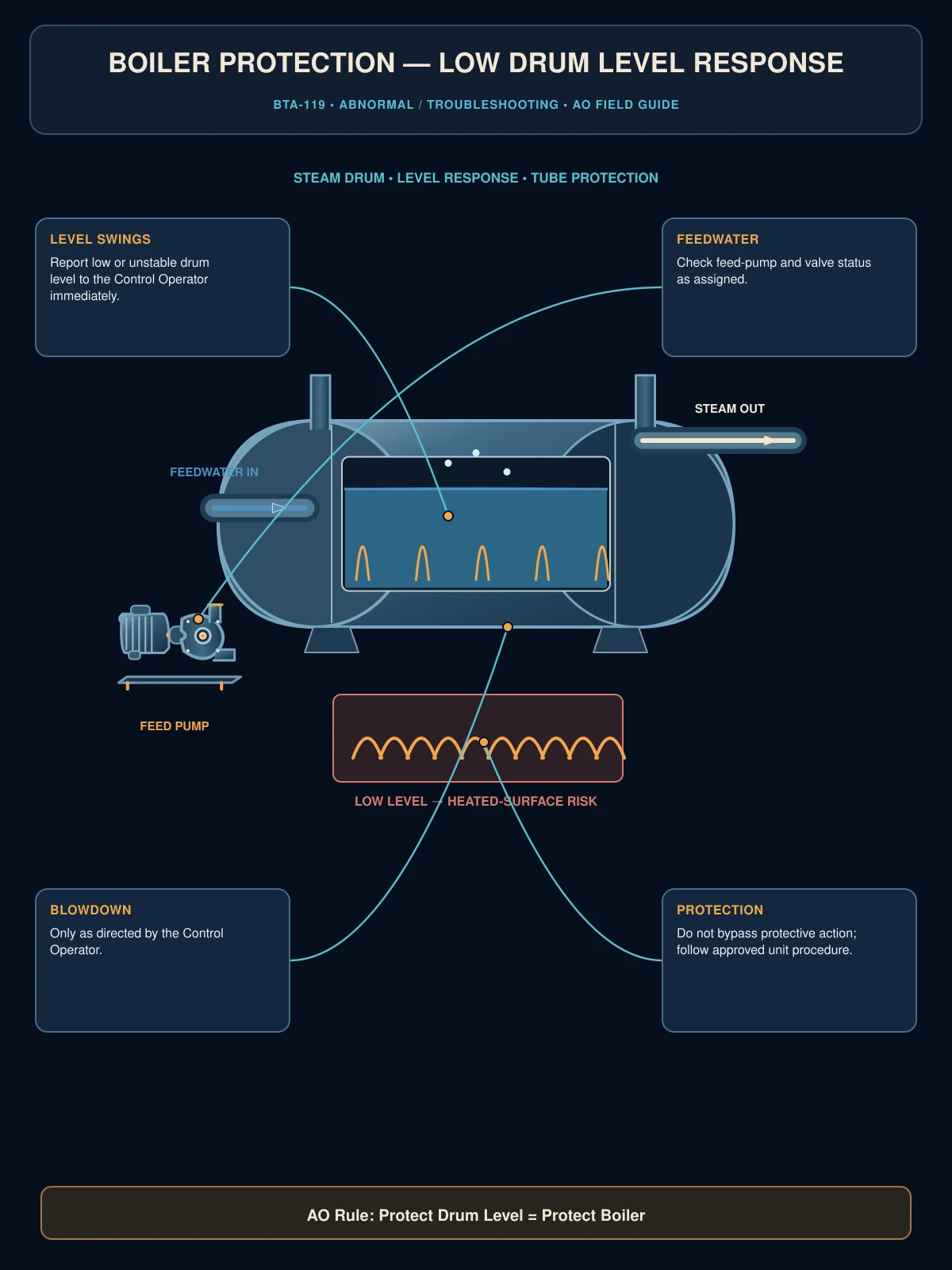
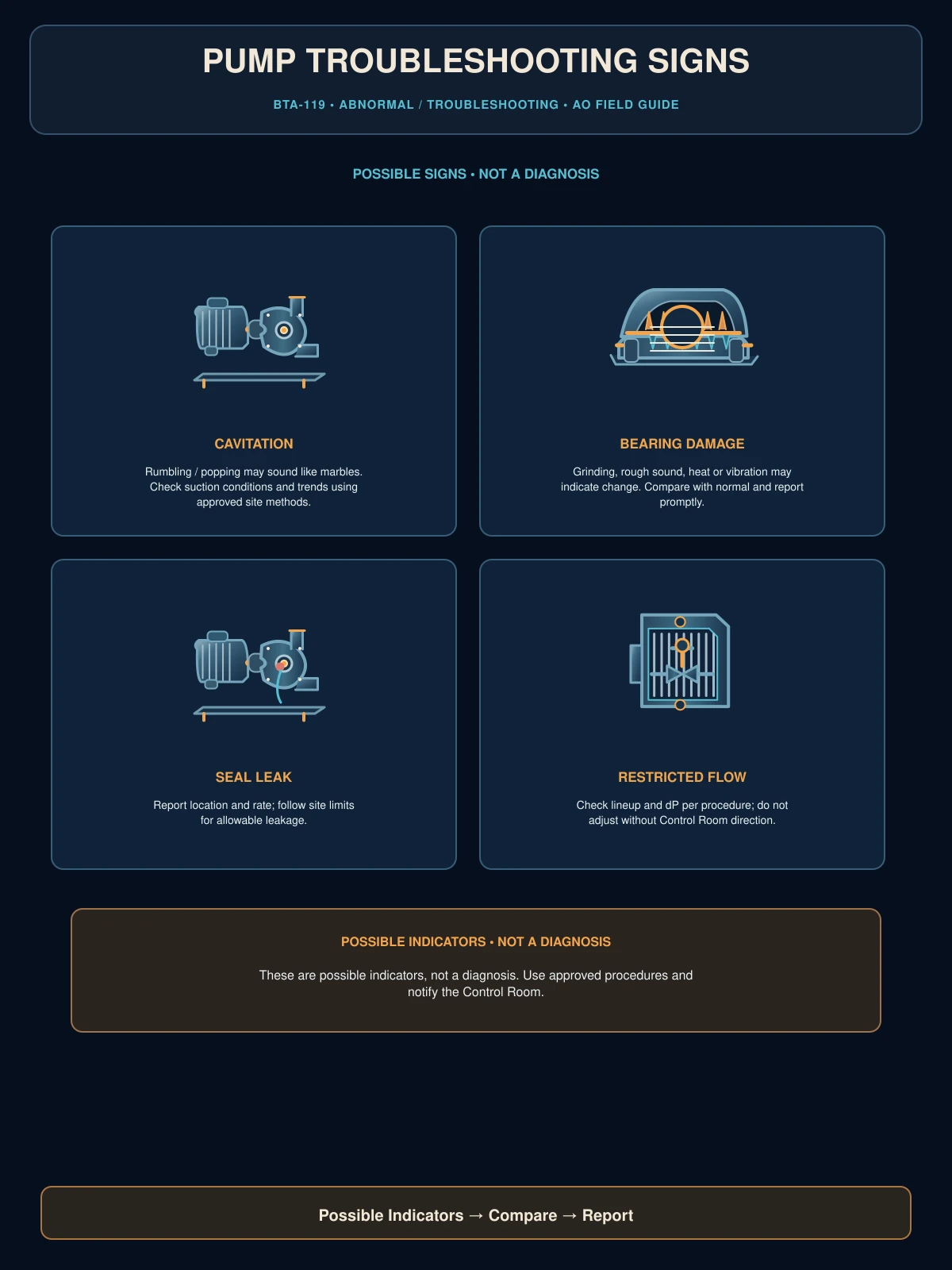
Every module in this course has described normal operating ranges for specific parameters. But "abnormal" isn't always a number outside a range — it's often a pattern that doesn't match expectations: a sound that's different, a trend moving the wrong direction, or a reading that's technically normal but doesn't make sense given everything else you're seeing. BTA-102 introduced the basic obligation to recognize and report abnormal conditions; this module goes deeper into the actual thinking process for working through one.
Good troubleshooting isn't about having all the answers — it's about following a consistent process that reliably gets the right people the right information quickly, even when you don't personally know what's wrong.
Step 1-2: Detect and Verify
Detection often comes from the sensory inspection habits covered in BTA-118 — you notice something during rounds, or an alarm annunciates in the control room. Before reacting, a quick verification step matters: is this reading real, or could it be an instrument problem? Cross-checking against a second source (a different instrument, a control room value, a second person's observation) takes very little time and prevents chasing a false signal while a real one goes unnoticed elsewhere.
Step 3: Assess Safety Risk First
Before anything else, ask whether this condition presents an immediate safety risk — to people or to equipment. This assessment determines everything that follows: a genuine emergency condition (covered fully in BTA-121) demands immediate action and often bypasses the rest of this careful sequence entirely. Most abnormal conditions aren't emergencies, but the safety assessment has to happen first, every time, before assuming that's the case.
It's tempting, especially when a condition seems minor or familiar, to skip straight to fixing it. Even a two-second mental check — "is anyone or anything at immediate risk here?" — is worth doing every time, because the conditions that turn out not to be minor rarely announce themselves as different from the ones that are.
Step 4: Consult Before You Act
For anything beyond routine, well-within-your-authority actions, consulting the relevant procedure, the Control Operator, or a more experienced colleague isn't a sign you don't know what you're doing — it's the correct process. Plants have procedures for abnormal conditions specifically because reasoning through a novel situation alone, under time pressure, is exactly when mistakes happen. Even a quick radio call to confirm your read on a situation is a low-cost, high-value habit.
Step 5: Act Within Your Authority, or Escalate
This connects directly to Stop Work Authority and the escalation concepts from BTA-102 and BTA-103: some conditions you're authorized and equipped to handle directly (a routine valve lineup adjustment, topping off a lubricant reservoir per procedure); others need to go to the Control Operator or a supervisor. Knowing which category a given situation falls into — and defaulting to escalation when genuinely unsure — is itself the core skill this step is testing.
A tripped breaker, MCC bucket, or protective device tripped for a reason — the protection system detected something it was specifically designed to catch. Never reset tripped equipment unless the cause has been evaluated and the applicable procedure and your operating authority specifically permit the reset. Reset authority and the required evaluation steps vary significantly by plant; this is exactly the kind of situation where defaulting to escalation, per the guidance above, is the safer default.
Step 6: Document and Follow Up
Whatever happened needs to make it into the log, specifically and honestly (the same documentation standards from BTA-118 apply directly here), and if the underlying cause wasn't fully resolved, it needs to be tracked until it is. A condition that gets handled in the moment but never properly documented or followed up on has a way of recurring — sometimes worse the second time, because nobody remembered it had happened before.
It's Rarely a Straight Line
Real troubleshooting loops: verifying a reading might reveal a second abnormal condition, which sends you back to detection; consulting a procedure might clarify that what looked minor is actually significant, sending you back to the safety assessment. Treat this less as a rigid checklist and more as a set of questions you keep returning to until the situation is genuinely resolved and understood, not just quiet.
Ready to test what you just learned?