Cooling Water Systems
The Job: Move Heat Off-Site
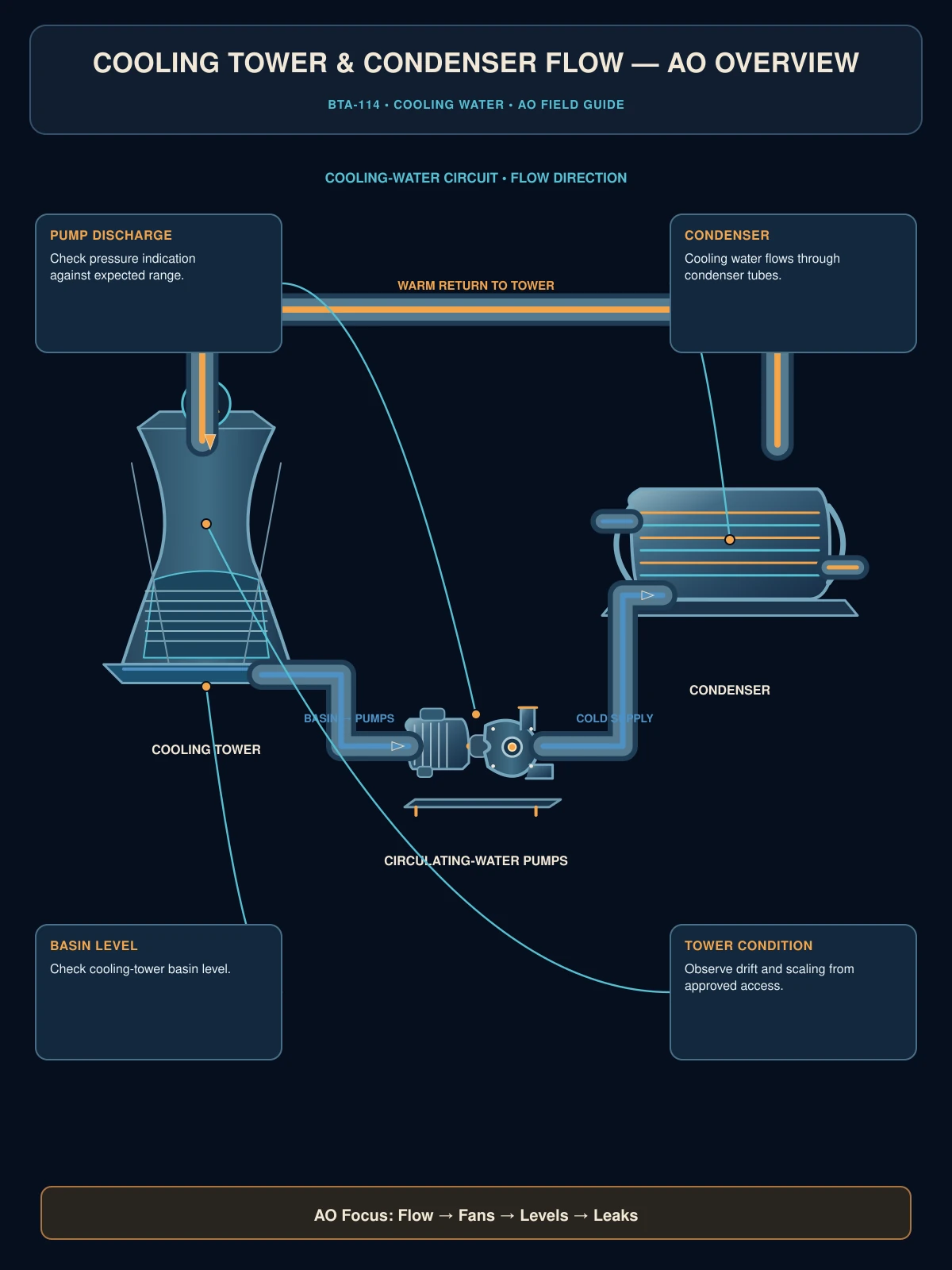
Every plant type in this course rejects a large amount of waste heat at the condenser — that's simply how the Rankine cycle works, requiring a cold sink to complete the cycle. The circulating water (CW) system's entire job is to carry that heat away from the condenser and get rid of it, either by discharging it (once-through cooling) or by evaporating it away (closed-loop cooling with a cooling tower, which you've already seen in the plant-type modules). This module goes deeper into the CW system itself, separate from the condenser side you already studied.
Once-Through vs. Closed-Loop
Two fundamentally different approaches exist for cooling water systems:
- Once-through cooling — water is drawn from a large natural source (a river, lake, or ocean), passed once through the condenser, and discharged back to the source at a higher temperature. Simple and efficient where large volumes of water and appropriate permits are available, but heavily regulated due to environmental impact on the water source.
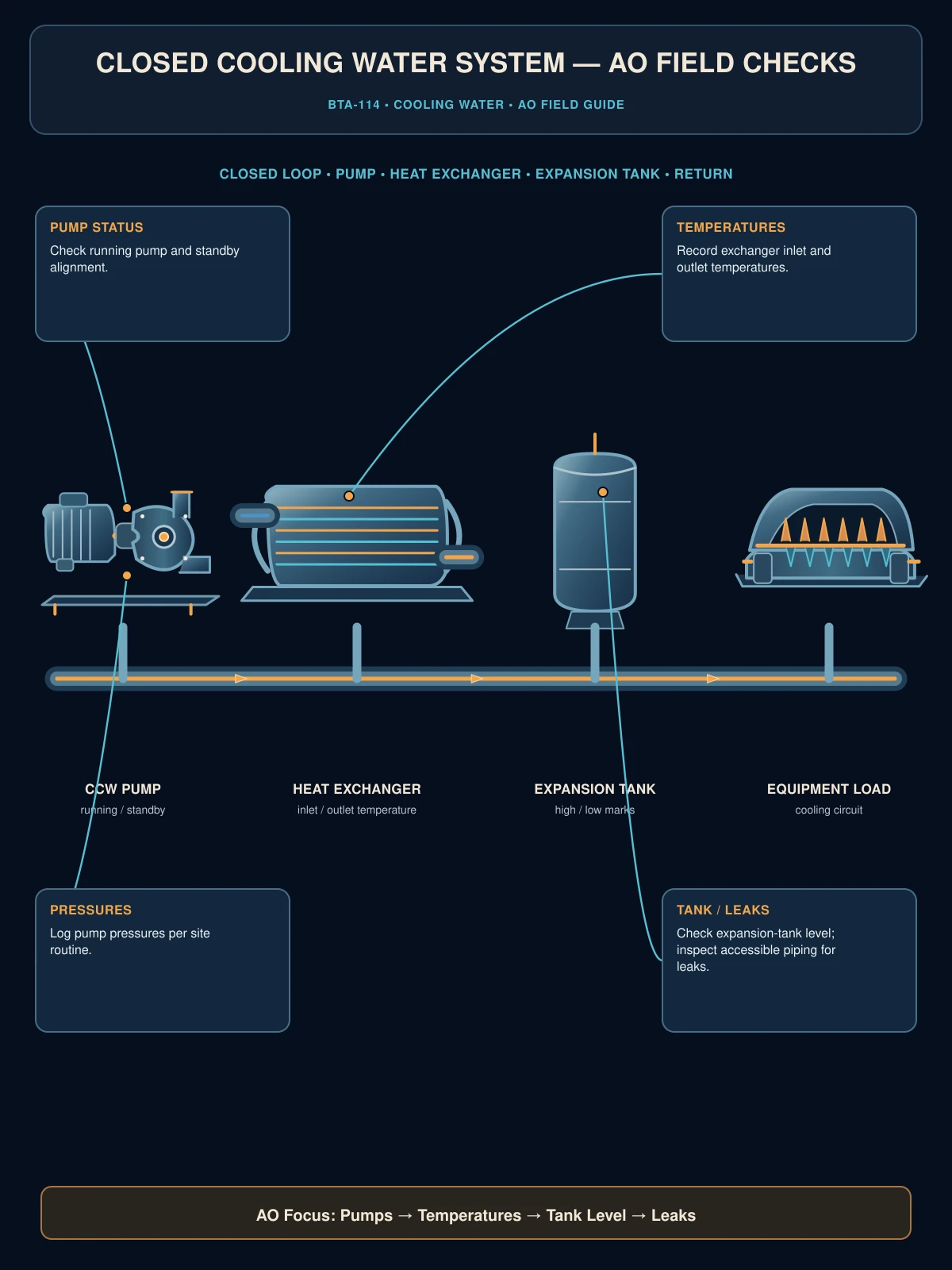
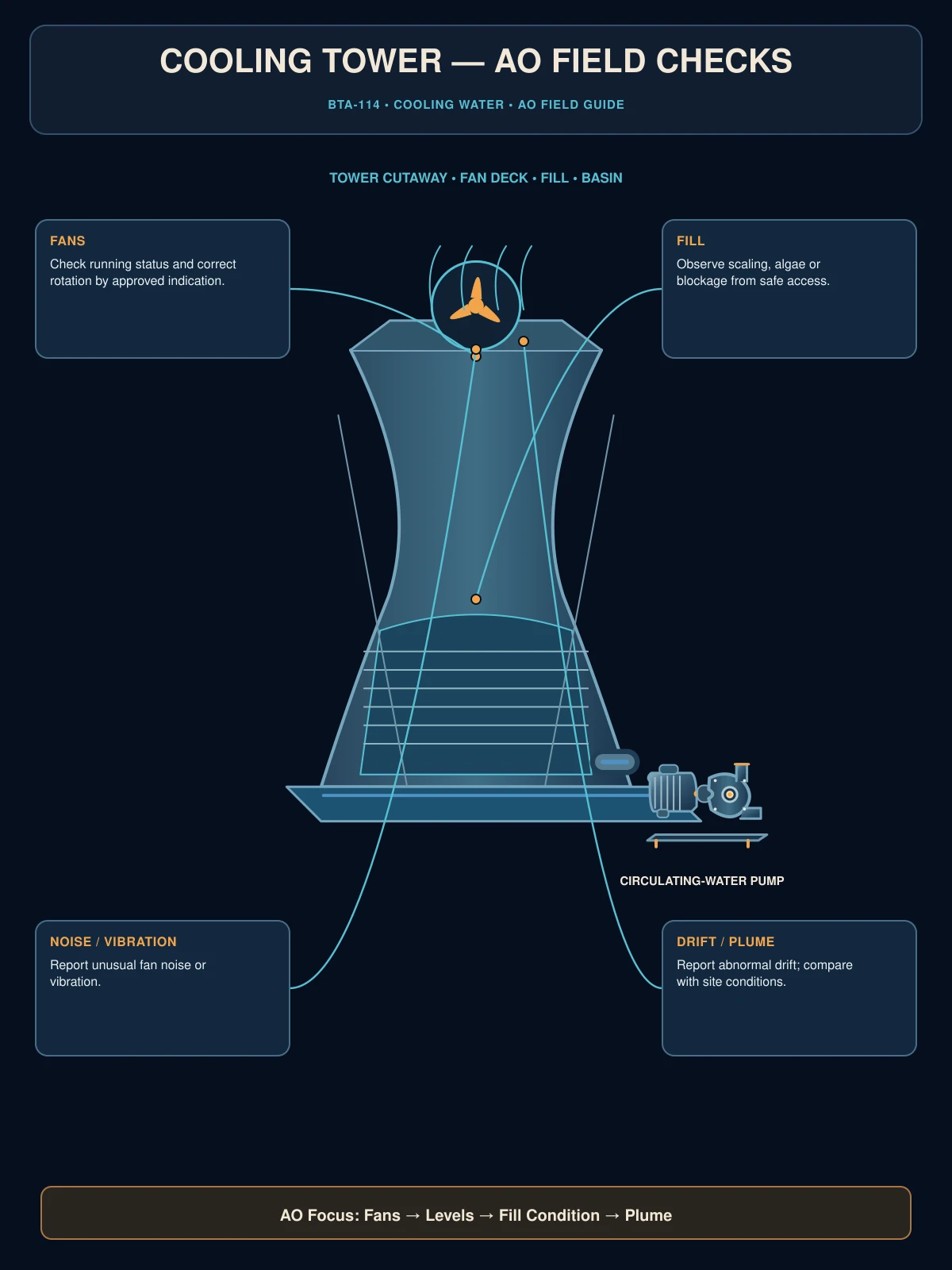
- Closed-loop cooling — the same water recirculates continuously between the condenser and a cooling tower, which rejects heat through evaporation rather than discharging heated water. This is the more common configuration in this course's plant modules, and it uses far less water overall, though it does consume water through evaporation and requires ongoing chemical treatment since the same water is reused indefinitely.
Whichever configuration your plant uses, the same core principle applies: circulating water temperature at the condenser inlet directly affects how much vacuum the condenser can pull, which directly affects how much output the steam turbine can produce. A "cooling water problem" is really a plant output problem in disguise.
Intake: Where Problems Often Start
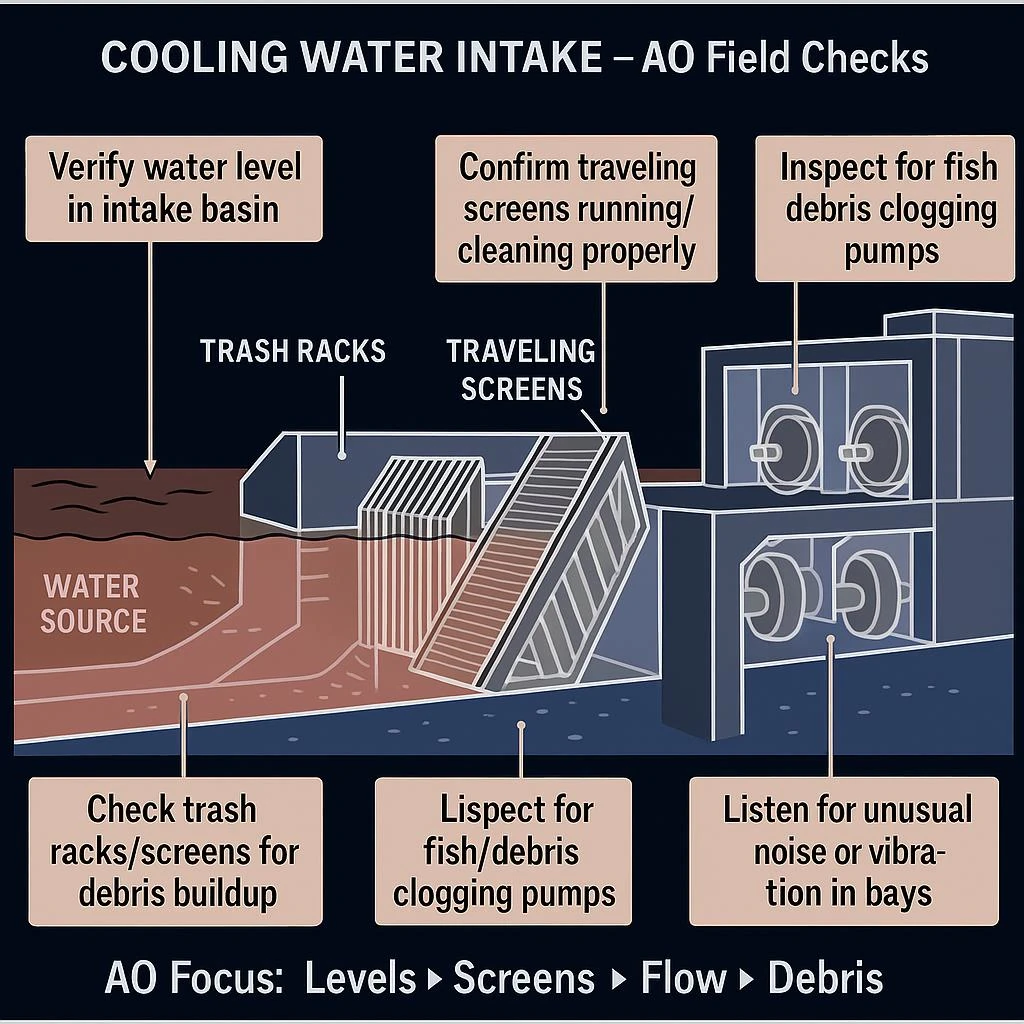
The intake structure draws raw water into the CW system, and traveling screens continuously remove debris — leaves, fish, trash — that could otherwise foul the condenser tubes or damage the CW pumps. Screens rotate and are cleaned continuously or on a schedule; a blocked or malfunctioning screen restricts flow to the pumps and can allow debris through to foul downstream equipment.
Circulating Water Pumps
CW pumps are typically large, low-head, high-flow centrifugal pumps — moving enormous volumes of water at relatively modest pressure, since the job is simply moving water through the condenser and back, not building high pressure. Because of their size, CW pump issues (vibration, cavitation, bearing problems) tend to be significant events rather than minor ones.
Chemical Treatment: Fighting Biology and Scale
In a closed-loop system, the same water recirculates continuously through warm equipment exposed to sunlight — ideal conditions for biological growth (algae, bacteria, and importantly, organisms like zebra mussels that can physically clog piping) and for mineral scale to form as water evaporates and concentrates dissolved solids, much like the boiler water chemistry covered in the previous module. CW chemical treatment typically includes:
- Biocides — control biological growth in the system, dosed periodically rather than continuously in many programs.
- Scale inhibitors — keep dissolved minerals from precipitating onto heat transfer surfaces as scale.
- Corrosion inhibitors — protect piping and equipment from the corrosive effects of the treated water itself.
Blowdown and Makeup — Familiar Concepts, Different System
Just like the boiler water cycle, a closed-loop CW system concentrates dissolved solids as water evaporates at the cooling tower, requiring CW blowdown to discharge some concentrated water and CW makeup to replace both the blowdown and the water lost to evaporation. The same balancing act from the previous module applies here — too little blowdown risks scale, too much wastes water and treatment chemicals.
CW discharge and blowdown are typically regulated under environmental permits governing temperature, chemical content, and flow. Unusual discharge conditions aren't just an operational concern — they're a compliance issue, and should be reported the same way you'd report any other permit-related observation.
Ready to test what you just learned?